






PluginsSketchUpRhino3ds MaxRevitBlenderUnreal EngineUnity
English
EnglishDeutschEspañolFrançaisItalianoPortuguêsNederlandsPolskiČeštinaMagyarSvenskaDanskNorskΕλληνικάTürkçeРусскийУкраїнськаעבריתالعربيةहिन्दीBahasa IndonesiaTiếng Việt日本語한국어简体中文繁體中文
Open Luw.ai
Unreal Engine
SketchUpSketchUpRhinoRhinoRhino and Grasshopper3ds Max3ds MaxRevitRevitBlenderBlenderUnityUnityUnityPlugins
Quick startInstallOpenFirst renderArchiGPTHelp
Download
Unreal EngineUnreal Engine

Luw.ai for Unreal Engine

Describe a building to ArchiGPT, or show it a plan you drew on paper, and watch it get built in your Unreal level. Change it by talking, bring in 3D objects no library has, then render it. No export, no extra app.

Download for Unreal Engine

Free. Version 0.1.9, 1.2 MB.

Available for: Unreal Engine 5.7, WindowsTested on: Unreal Engine 5.7

Guide

Luw.ai × Archiagent.ai in Unreal Engine: a hand-drawn plan becomes a furnished, textured villa with a garden, then renders of the view and of every room.

Quick start

  1. 1

    Download

    Save Luw.ai-Unreal.zip and unzip it into a folder.

    Download
  2. 2

    Install

    Close the Unreal editor. In the folder, right-click install.ps1 and choose Run with PowerShell.

    Show me how
  3. 3

    Render

    Click the Luw.ai button in the toolbar, sign in and click Render AI. Your view is already in it.

    Show me how

What you need

Unreal Engine 5.7On Windows.

A Luw.ai accountEach render uses tokens from your account: 1 token for one image.

An internet connectionThe renders are made on Luw.ai's servers.

Install the plug-in

  1. 1
    Download Luw.ai-Unreal.zip and unzip it into a folder.
  2. 2
    Close the Unreal editor.
  3. 3
    In the unzipped folder, right-click install.ps1 and choose Run with PowerShell. Windows asks you to allow it, because Unreal Engine is in Program Files. Luw.ai is then in every project you open with Unreal Engine 5.7.
  4. 4
    Open your project.
Only one project? Run install.ps1 -Project "C:\Projects\MyProject\MyProject.uproject" instead. Luw.ai goes into that project's Plugins folder.

Open Luw.ai and sign in

  • Click the Luw.ai button in the level editor's toolbar, or choose Window › Luw.ai.

    The Unreal editor's toolbar with the Luw.ai button after the Play buttons, marked.
  • The Luw.ai panel docks on the right, with the Outliner and Details. It is the Luw.ai web app, made to work with Unreal. Drag its tab wherever you like; it opens there next time.
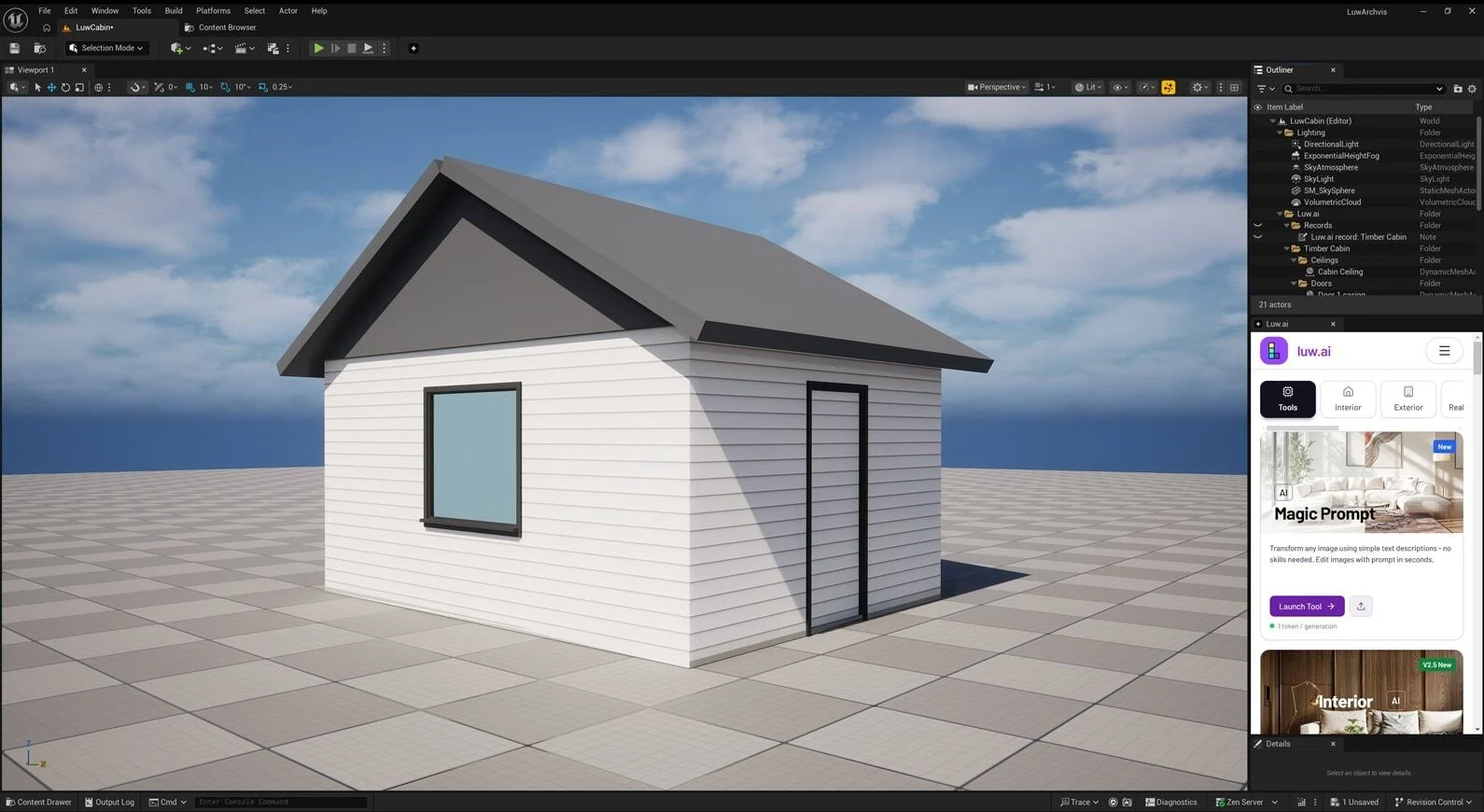
    The Unreal editor with the Luw.ai panel docked on the right between the Outliner and Details, showing Luw.ai's tools.
    The Luw.ai panel, docked in the Unreal editor.
  • First time only: sign in with your Luw.ai account in the panel. Unreal remembers you, so next time the panel opens ready to use. Signed in to Luw.ai in another Luw.ai plugin on this computer? Then you are signed in here too.
  • Typing in the panel: while you type in the panel, Unreal's keyboard shortcuts are off, so your words don't turn into commands. Ctrl+C, Ctrl+V and Ctrl+Z work on your text.
The Unreal editor's toolbar with the Luw.ai button after the Play buttons, marked.
The Unreal editor with the Luw.ai panel docked on the right between the Outliner and Details, showing Luw.ai's tools.
The Luw.ai panel, docked in the Unreal editor.

Get your first render

  1. 1
    Set up your view. Frame the level viewport until you like the picture. What you see is what Luw.ai renders.
    Tip: the Lit view mode with materials gives better renders than Wireframe or Unlit.
  2. 2
    Click Render AI on the panel's home page: your Unreal view is already in it. You don't need to save or export anything. Moved the camera? Click Capture Unreal Engine view on the picture to take the new view.
  3. 3
    Choose options if you like: Time of Day, Lighting, or a short Prompt such as “golden hour, warm light on the brick”. Or leave them on Auto.
  4. 4
    Click Generate Image with AI. One image uses 1 token. Your render is ready in about a minute. Click it to open it.
  5. 5
    Compare and keep it. Drag the slider to compare the render with your view, then click Add to Unreal Engine at the top left.
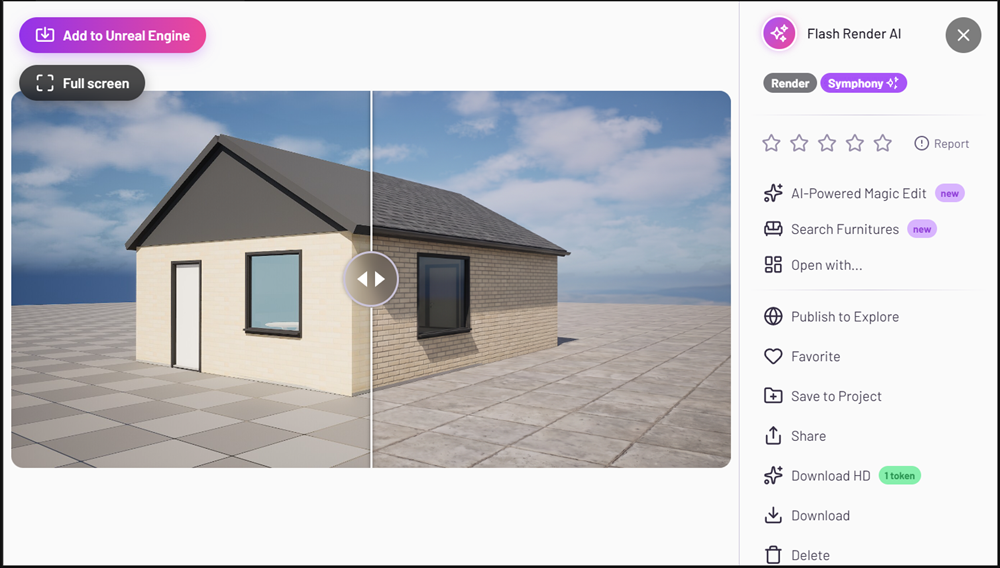
    The finished render with a slider comparing it with the Unreal view, in the Luw.ai panel. The Add to Unreal Engine button is at the top left.
  6. 6
    That's it. The render is now in your level as a picture on a plane beside the model, facing the camera. It shows exactly as rendered: the level's fog and lights don't change it. To remove it, press Ctrl+Z once.
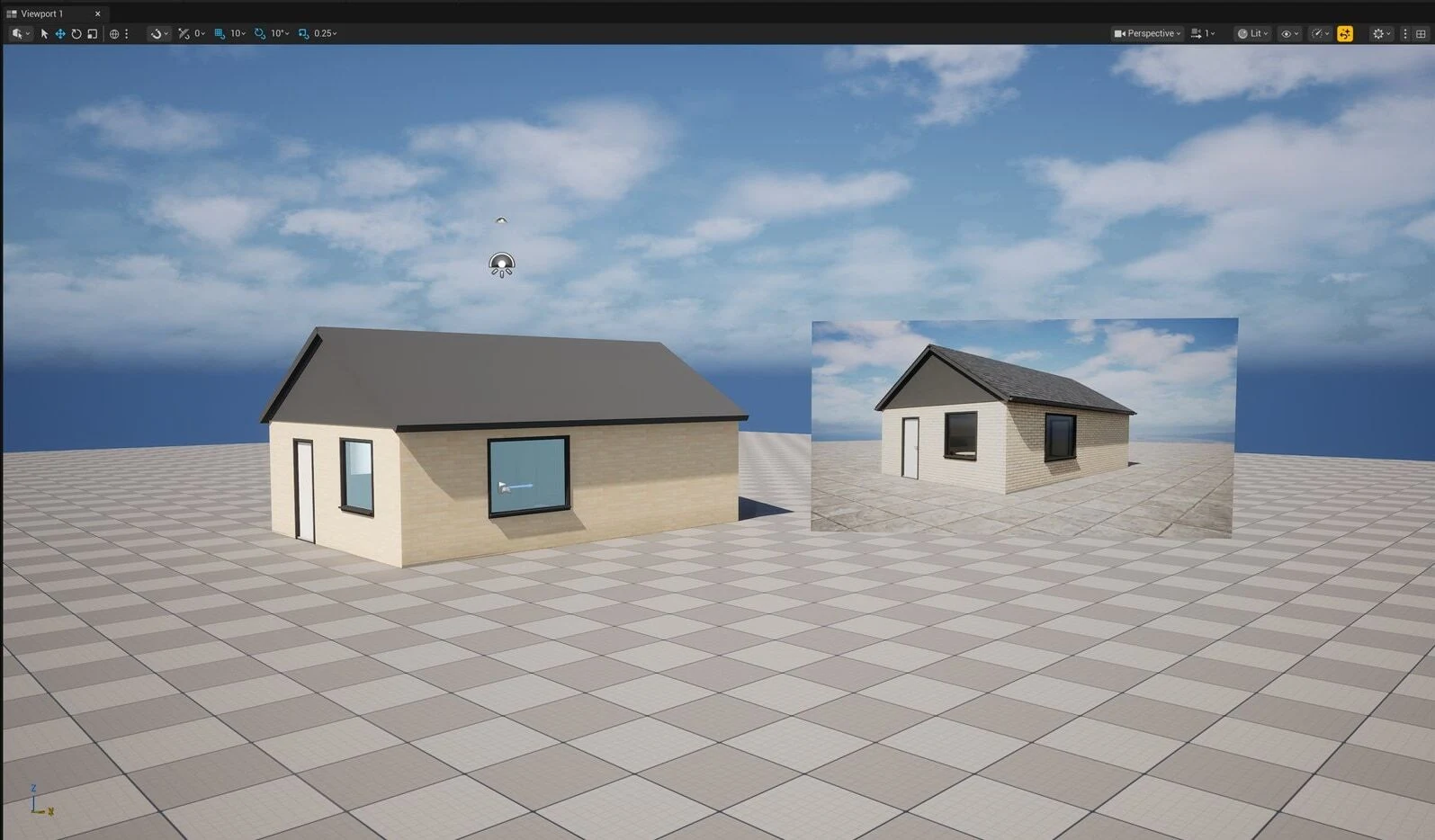
    The Unreal viewport with the house and its render placed beside it on a plane.
    Your model and its render, side by side in Unreal.
The finished render with a slider comparing it with the Unreal view, in the Luw.ai panel. The Add to Unreal Engine button is at the top left.
The Unreal viewport with the house and its render placed beside it on a plane.
Your model and its render, side by side in Unreal.

More tools

Open the menu (☰) at the top of the panel for more tools, such as interiors, exteriors, sketch to render and video. Most tools start with your Unreal view. With 3DGen AI you get a 3D model, and Add to Unreal Engine brings it into your level as a static mesh, standing on the ground you look at.

Design a building with ArchiGPT

ArchiGPT is Luw.ai's design assistant. In Unreal it builds what you describe straight into your level, as ordinary actors in folders under Luw.ai in the Outliner, while you watch.

  1. 1
    Open ArchiGPT from the home page of the Luw.ai panel.
  2. 2
    Say what you want. Describe the building, or attach a photo of a plan you drew on paper and write something like “Apply this floorplan as a villa.” ArchiGPT builds it in Unreal: walls, rooms, doors and windows, the kitchen, furniture.
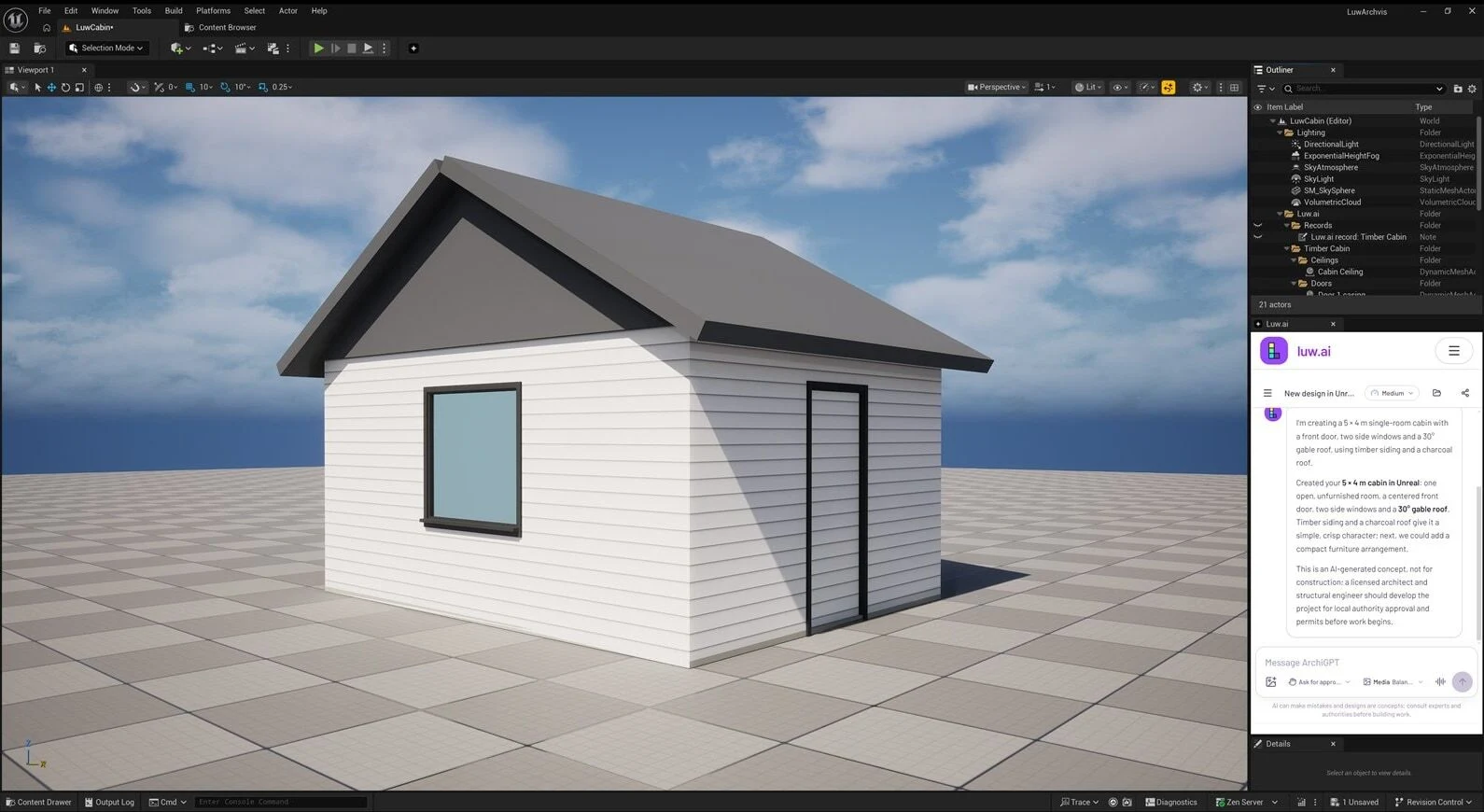
    The Unreal editor with a small timber cabin built by ArchiGPT, with a gable roof, its folder Timber Cabin in the Outliner, and the conversation in the Luw.ai panel on the right.
    The cabin in Unreal, and the conversation that built it.
  3. 3
    Change it by talking. “Give it a 30° gable roof”, “move the east wall 0.5 m out”, “add a terrace by the door”. Only what changed is rebuilt. Select something in Unreal first and ArchiGPT knows what “this” means. It knows your own actors too: “what else is in the scene?”
  4. 4
    Change it yourself, too. Move, turn, scale or delete what ArchiGPT built, or add actors of your own, whenever you like. Your changes stay when ArchiGPT builds again.
  5. 5
    Add materials. “A dark grey metal roof, light warm brick on the outside walls.” ArchiGPT puts materials on the model, and can have Pattern AI make a texture just for it. When a step uses tokens, ArchiGPT shows what it costs and waits for your Approve.
  6. 6
    Add what no library has. “A bronze sculpture by the door.” ArchiGPT designs it, 3DGen AI makes it a real 3D model, and it lands in your level.
  7. 7
    Render it. Frame a view in Unreal and ask for a render. Click a result to see it full size, or put it in your level with Add to Unreal Engine.
The Unreal editor with a small timber cabin built by ArchiGPT, with a gable roof, its folder Timber Cabin in the Outliner, and the conversation in the Luw.ai panel on the right.
The cabin in Unreal, and the conversation that built it.
A pool in the ground: a pool or anything else set into the ground goes below the level's ground surface, so a ground slab such as the Floor of a Basic level hides it. Delete or lower that floor before you build.
Undo: each change ArchiGPT makes in Unreal is one step. Press Ctrl+Z in the level to take it back.


Help

I don't see the Luw.ai button.
Choose Window › Luw.ai. If it isn't there either, choose Edit › Plugins, search for Luw.ai, turn it on and restart the editor.
The panel is empty or doesn't load.
Luw.ai needs the internet. Check your connection, then close the Luw.ai tab and open it again.
The picture in the panel is an old view.
Click Capture Unreal Engine view on the picture.
Something went wrong.
Send us the file %LOCALAPPDATA%\Luw.ai\logs\plugin.log and the lines starting with “LogLuwAI” in Unreal's Output Log (Window › Output Log).
How do I remove the plug-in?
Close the Unreal editor, then right-click uninstall.ps1 in the unzipped folder and choose Run with PowerShell. What Luw.ai made in your projects stays in their LuwAI content folder.

Screenshots from Unreal Engine 5.7 on Windows.

More plugins

  • SketchUpSketchUpDescribe a building and watch it get built in your model. Change it by talking, bring in 3D objects, render any view.
  • RhinoRhinoGrasshopperRhino and GrasshopperTalk to ArchiGPT and it builds in your Rhino model. Render any view, or many design options at once from Grasshopper.
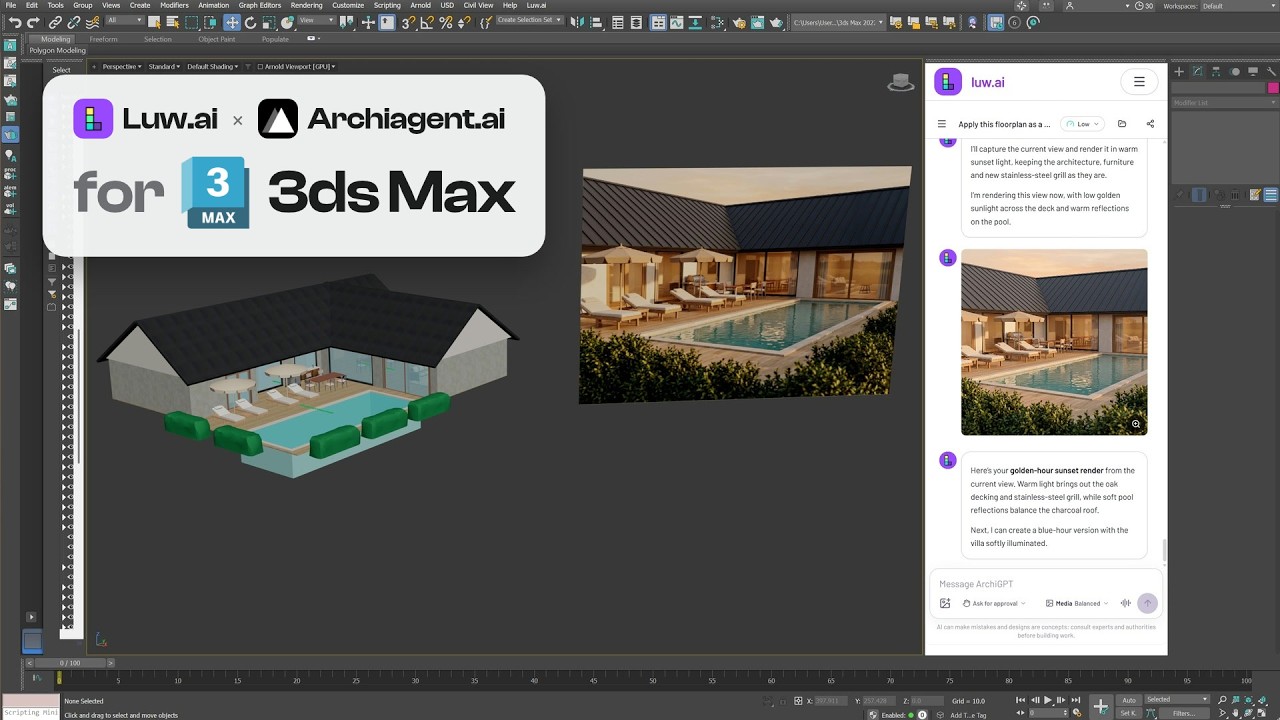
  • 3ds Max3ds MaxArchiGPT builds into your scene, adds the 3D objects no library has and renders every room, in a panel docked in 3ds Max.
  • RevitRevitArchiGPT builds real Revit walls, floors and roofs into your project, adds the 3D objects no library has and renders every room, in a panel docked in Revit.
  • BlenderBlenderArchiGPT builds into your scene, in collections of its own, adds the 3D objects no library has and renders every room, in a panel docked in Blender.
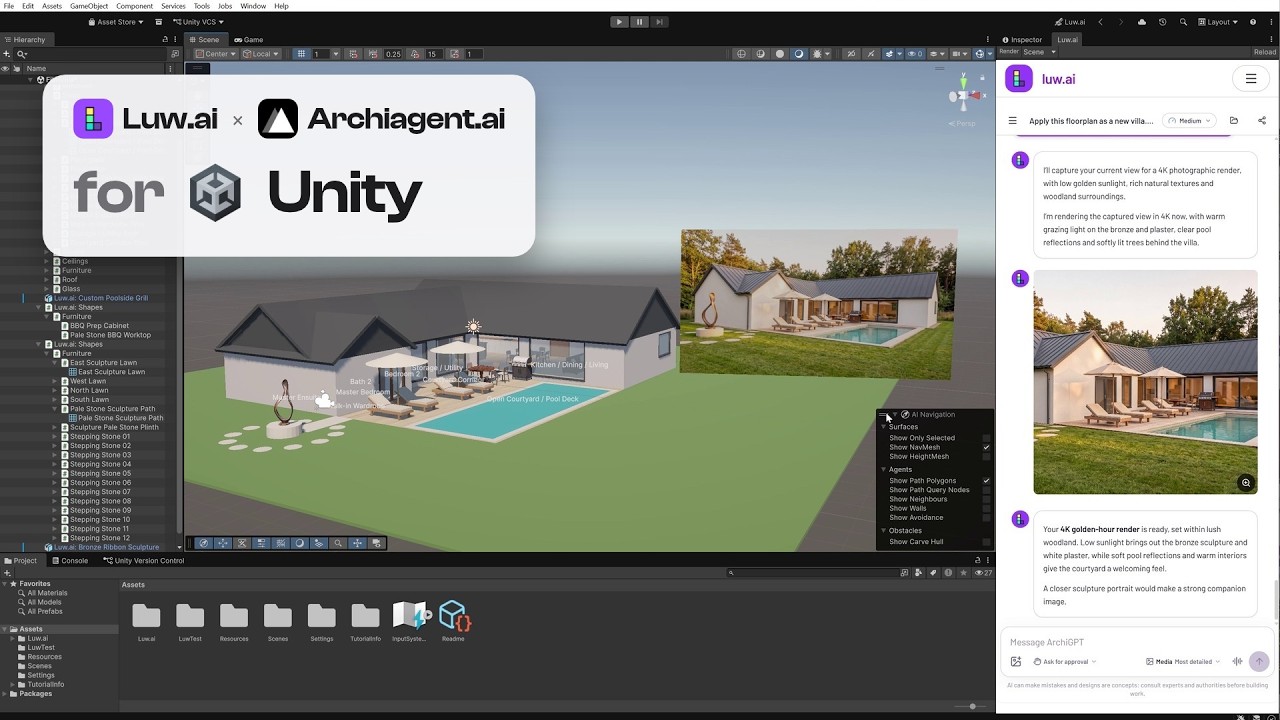
  • UnityUnityUnityArchiGPT builds into your scene as ordinary GameObjects with real meshes and colliders, and renders the Scene or Game view, in a panel docked in the Unity editor.
Luw.aiPluginsFree toolsSupportPrivacyTerms
© Luvi Technologies, Inc.
EnglishDeutschEspañolFrançaisItalianoPortuguêsNederlandsPolskiČeštinaMagyarSvenskaDanskNorskΕλληνικάTürkçeРусскийУкраїнськаעבריתالعربيةहिन्दीBahasa IndonesiaTiếng Việt日本語한국어简体中文繁體中文

AI-generated designs are concepts, not construction documents.

SketchUp is a trademark of Trimble Inc. Rhinoceros and Grasshopper are registered trademarks of Robert McNeel & Associates. Autodesk, 3ds Max and Revit are registered trademarks of Autodesk, Inc. Blender is a registered trademark of the Blender Foundation. Unreal Engine is a trademark of Epic Games, Inc. Unity is a trademark of Unity Technologies. Luw.ai is not affiliated with these companies.